Ready for immediate shipment, delivery time: 1-3 days, abroad + bulky goods longer delivery time
Ready for immediate shipment, delivery time: 1-3 days, abroad + bulky goods longer delivery time
Spatula/Filling materials for the Typ 181
Spackle for the VW Type 181 (Kübel) – the foundation of a perfect classic restoration
The Volkswagen Type 181 Kübelwagen is not just a vehicle – it is a rolling piece of history. Honest, angular, utilitarian, and full of character. Every line tells a story of purpose rather than perfection. And yet, when restoring such a classic, perfection becomes the goal. This is exactly where spackle for the VW Type 181 (Kübel) becomes essential: it is the invisible layer that turns worn metal into a flawless canvas for a new life.
Restoring a Kübel is never just about repairing bodywork. It is about preserving attitude.
Why spackle is essential in restoring the VW Type 181
Time leaves its marks on every classic vehicle. Even the robust VW Type 181 develops dents, surface rust, uneven panels, and traces of past repairs. While these imperfections are part of its history, they must be carefully balanced with craftsmanship during restoration.
This is where spackle for the VW Type 181 (Kübel) plays a crucial role. It smooths transitions, compensates for imperfections, and creates the perfect surface for primer and paint. Without it, even the highest-quality paintwork would fail to achieve depth, uniformity, and durability.
Spackle is not just filler – it is the bridge between past and future.
Different types of spackle for VW Type 181 bodywork
Every restoration project requires different materials depending on the condition of the bodywork. A proper VW Type 181 restoration often involves a combination of several spackle types, each serving a specific purpose.
Finishing spackle for perfection
Finishing spackle is used as the final layer before painting. It eliminates micro-imperfections and creates a silky-smooth surface. On the VW Type 181, where large flat body sections are common, this step is essential for achieving a uniform visual finish.
Filler spackle for structural leveling
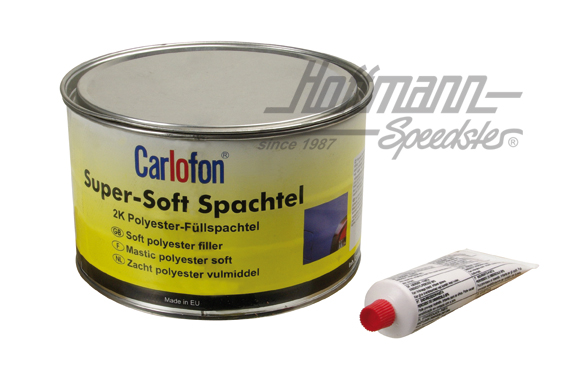
When dents, uneven welds, or repaired areas are present, filler spackle provides the necessary build-up. It is stronger and thicker, allowing restorers to shape the body back to its original geometry.
Fiberglass spackle for heavy-duty repairs
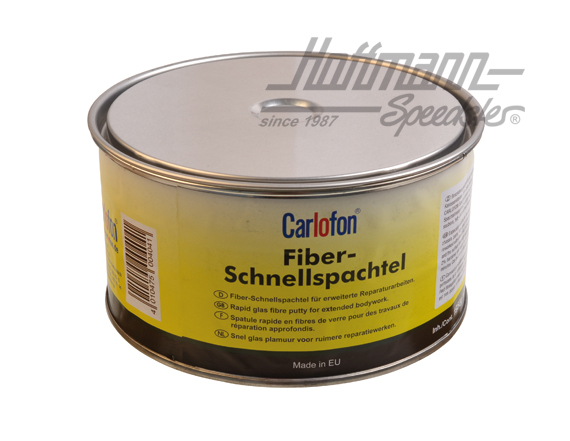
For rust-damaged or weakened areas, fiberglass-reinforced spackle is indispensable. It adds structural strength and stability, making it ideal for repairing typical problem zones on a Kübelwagen that has seen decades of use.
Correct application of spackle on the VW Type 181
Working with spackle for the VW Type 181 (Kübel) requires patience, precision, and respect for the material. The goal is not speed, but perfection in layers.
First, the surface must be thoroughly cleaned and sanded. Only a properly prepared metal surface ensures strong adhesion. After that, the spackle is applied in thin, controlled layers. Thick applications should always be avoided, as they increase the risk of cracking or shrinking over time.
Once hardened, the shaping process begins. Sanding is where craftsmanship truly shows. With progressively finer grit, the surface is refined until it blends seamlessly into the surrounding bodywork. Only then is it ready for primer, sealing, and paint.
Every stroke of sandpaper brings the Kübel one step closer to its revival.
Common mistakes when using spackle on a Kübel restoration
Restoring a VW Type 181 is deeply rewarding, but also unforgiving when shortcuts are taken. One of the most common mistakes is applying spackle too thickly. This leads to instability, cracking, or visible sinkage after painting.
Another frequent issue is insufficient surface preparation. Spackle applied over rust, grease, or glossy paint will inevitably fail. Likewise, skipping sanding stages between layers can compromise the final finish.
Choosing the wrong material can also affect long-term durability. Not every product is suited for the demands of a classic off-road vehicle like the VW Type 181.
Choosing the right spackle for your VW Type 181 project
The right combination depends entirely on the condition of your vehicle. Light cosmetic restorations may only require finishing and filler spackle, while heavily worn Kübelwagens demand a full system including fiberglass-reinforced solutions.
The key principle remains the same: work in layers, not shortcuts. A well-prepared surface is what ultimately defines the quality of the final paintwork.
The VW Type 181 is forgiving in spirit, but not in surface preparation. What you build beneath the paint determines everything that comes after.
Spackle for the VW Type 181 (Kübel) – where craftsmanship meets emotion
Restoring a Kübel is never just mechanical work. It is a dialogue with history. Every repaired panel, every smoothed edge, every layer of spackle brings the vehicle closer to its second life.
At Hoffmann Speedster, enthusiasts and restorers find precisely the materials needed to preserve and revive these iconic classics. Products designed not just for repair, but for passion-driven restoration work.
Because in the end, a perfectly restored VW Type 181 is more than a vehicle again – it becomes a statement. A reminder that true classics are not replaced, but reborn through careful hands and patient craftsmanship.