
Storing classic cars: Here's what you need to know!
- Classic cars are more delicate than modern vehicles and should be stored over the winter months.
- Proper preparation for storage is very important and extends the life of the vehicle.
- The storage space should generally be dry, well-ventilated, and have a stable temperature.
- Even during storage, the vehicle should be checked regularly.
Storing a classic car: What to keep in mind
Classic cars aren’t daily drivers and are therefore often stored over the winter months whenever possible. They are much more sensitive than modern vehicles. Paint, chrome, and seals react to temperature fluctuations, moisture, and dust. If a classic is left outside in all weather, corrosion, mold, or even engine damage can result. Professional storage prevents this and ensures the vehicle remains ready to start—visually and mechanically—even after months without use.
Preparation is everything
A classic should never just be parked after its last outing. Before its winter break, it needs to be prepared for storage.
Clean thoroughly before storage:
Clean paintwork, wheels, and the underbody to remove dirt and salt residues.
Check fluid levels:
Change the oil, check the coolant level, and stabilize the fuel with an additive.
Increase tire pressure:
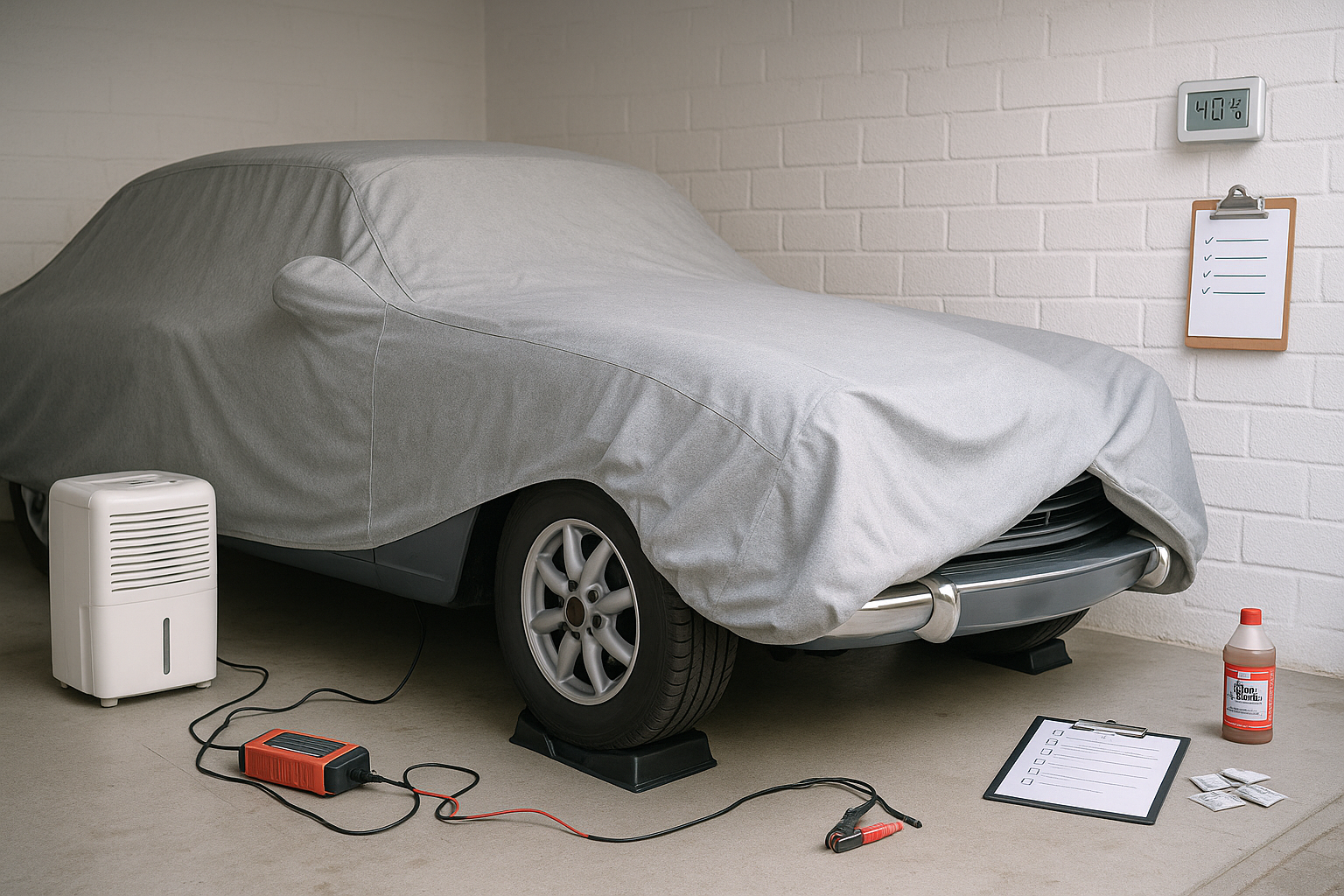
To prevent flat spots, increase pressure by approx. 0.5 bar or put the car on stands.
Battery care:
Disconnect the battery or connect it to a maintainer.
Protect the interior during storage:
Treat seats and dashboard with care products; leave windows slightly open to prevent mold growth.
Use a cover during storage: A breathable car cover protects against dust without trapping moisture.
The right place: Where should a classic car be stored?
An ideal storage location is a dry, well-ventilated space with stable temperatures.
Purpose-built garages or storage facilities designed for classic cars are perfect. They provide constant conditions and protect the vehicle from UV radiation, frost, and moisture. Those who want professional storage can use providers offering insured, climate-controlled, and secure storage—often including battery maintenance and regular checks—though this is usually more expensive.
Of course, not everyone can store their classic in such a professional facility. A heated, brick-built garage can also do the job. Ideally, humidity should be around 40% to prevent mold or corrosion. Avoid poorly ventilated, damp, or unheated garages, as these encourage condensation.
Pest protection is just as important as a dry environment. Small animals and insects like to seek shelter in warm corners during the cold season, especially in upholstery or in the engine bay of seldom-used vehicles.
Regular inspections and, if necessary, suitable repellents help keep unwanted guests away.
Regular moisture monitoring also plays a major role. If the storage location isn’t optimally climate-controlled, consider using a dehumidifier or a special vacuum storage cover with desiccant to prevent condensation. A digital thermo-hygrometer also helps you keep an eye on temperature and humidity.
Proper storage pays off
Correctly storing a classic car is crucial for preserving its value and beauty over the long term. Whether in your home garage or with a specialized provider, anyone who prepares and stores their classic with care can look forward to a perfect driving experience year after year.
Related products
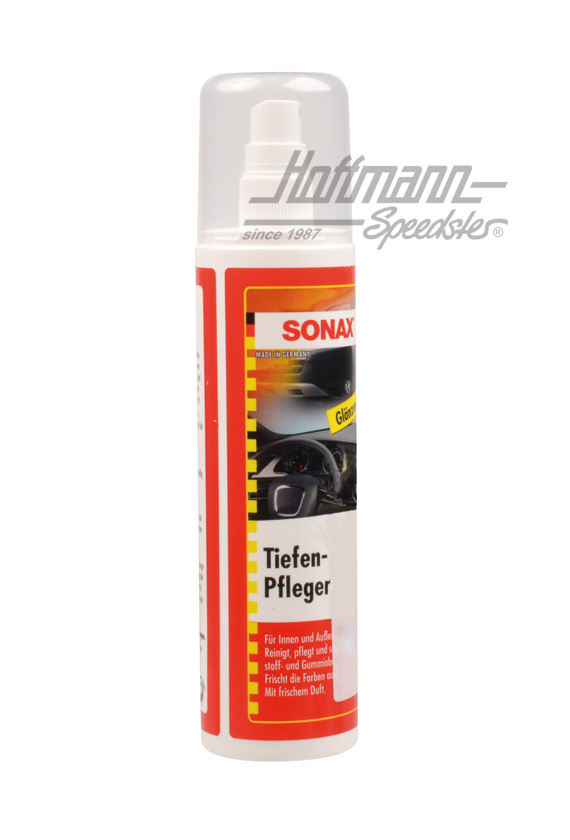
SONAX Tiefenpflege Kunststoff+Gummi, 300ml
€11.90*
Pumpzerstäuber, glänzend und mit DuftHochwertige Pflegeemulsion fürKunststoff und Gummi. Reinigt, pflegtund schützt innen und außen. Dringttief in die Oberfläche ein und wirktvon innen. Kunststoff- und Gummiteilewerden gereinigt und vor Witterungs-einflüssen geschützt. Wirkt anti-statisch, frischt die Farben auf undsorgt für angenehmen Duft. Es ent-steht eine glänzende Oberfläche.Lösemittelfrei.
Product number:
024-1172
Ready for immediate shipment, delivery time: 1-3 days, abroad + bulky goods longer delivery time
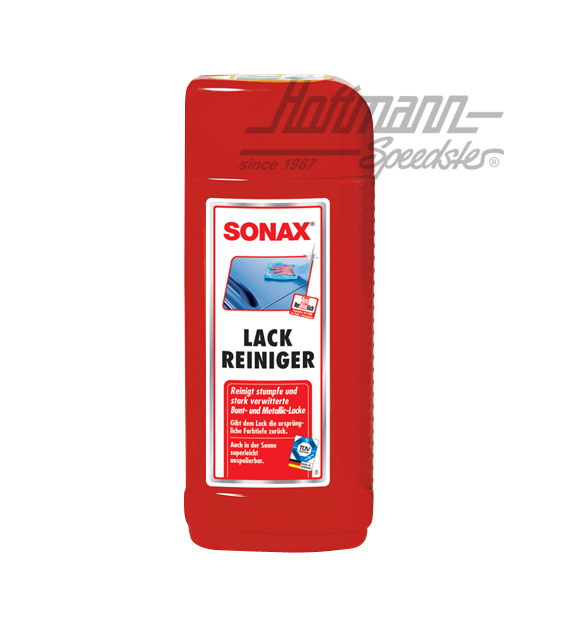
SONAX LackReiniger, 500 ml
€17.80*
Reinigt stumpfe, leicht zerkratzteund stark verwitterte Bunt- undMetallic-Lacke und gibt dem Lack dieursprüngliche Farbtiefe zurück.Glättet feine Kratzer.Schmutzrückstände und leichte Teer-flecken werden beseitigt. Spielendleichte Verarbeitung. Zur Lack-konservierung ist eine Nachbehandlungmit SONAX AutoHartWax empfehlenswert.
Product number:
024-1050
Ready for immediate shipment, delivery time: 1-3 days, abroad + bulky goods longer delivery time
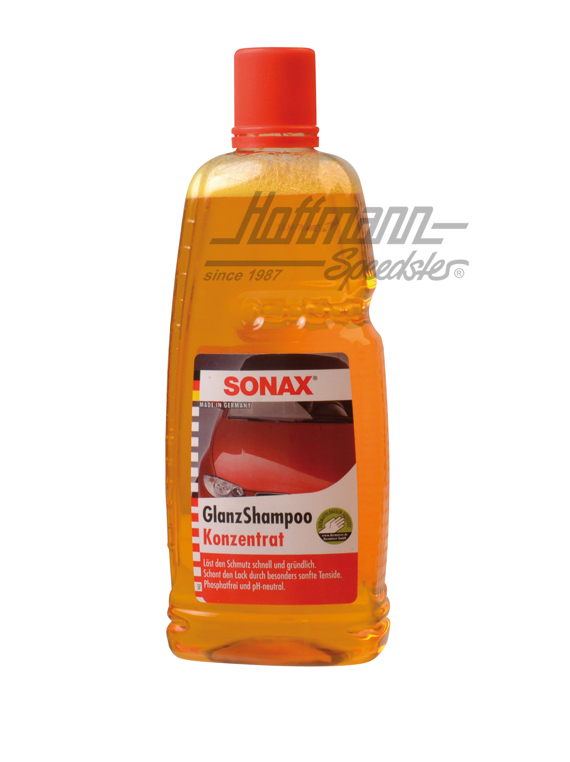
SONAX GlanzShampoo, 1 l Plastikflasche
€9.90*
GlanzShampoo Konzentrat.Konzentrierte Reinigungskraft zurmanuellen Reinigung von Kraftfahr-zeugen. Wirkt schnell und gründlichgegen die typischen Straßen-verschmutzungen bei gleichzeitigermaximaler Oberflächenschonung. ZurReinigung sämtlicher lackierterOberflächen, Metall, Glas, Kunst-stoff, Gummi, Fliesen, Porzellan undemaillierten Flächen geeignet.Phosphatfrei.
Product number:
024-1020
Ready for immediate shipment, delivery time: 1-3 days, abroad + bulky goods longer delivery time