
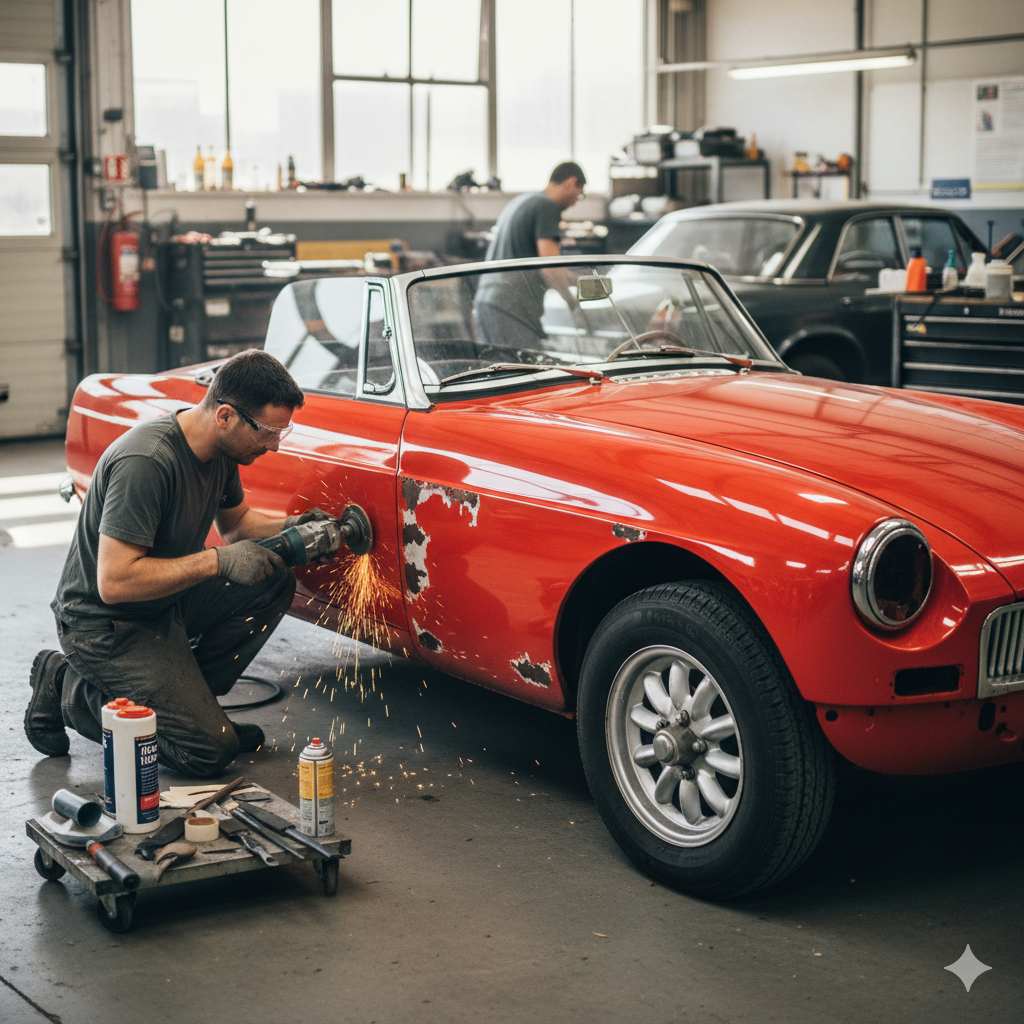
Removing Rust from Classic Cars: How to Save Your Vintage Vehicle from Corrosion
Key Takeaways:
- Classic cars are prone to rust because many vehicles were built decades ago without modern corrosion protection.
- The earlier rust is treated, the better.
- For extensive rust damage, it’s worth consulting a professional workshop.
Classic cars are constantly exposed to environmental influences. Many of them are not stored in garages year-round, which often leads to the dreaded rust spots that every classic car enthusiast despises. Few things can harm a vintage car as quickly as rust. Still, rust doesn’t have to spell disaster: those who act early and properly remove it not only preserve the car’s value but also ensure safety and long-lasting driving pleasure.
Why Rust Is a Problem for Classic Cars
Rust forms when metal comes into contact with moisture and oxygen. For classic cars, the issue is especially severe because most vehicles built decades ago lacked modern anti-corrosion technology. Small patches of rust can quickly grow into serious damage, weakening the bodywork and resulting in costly repairs. The golden rule: the sooner rust on a classic car is treated, the better.
Step-by-Step Guide: How to Remove Rust from a Classic Car
1. Thoroughly Clean the Vehicle
Before tackling rust spots, wash and dry the car carefully. Dirt, oil, or old wax layers can interfere with rust removal. Pay special attention to corners, wheel arches, and the underbody—these are areas where rust typically forms first.
2. Expose the Rust
Rust often hides beneath paint or dents. A small wire brush or sandpaper can help uncover affected areas. For hidden cavities, tools like a rust tester or even an endoscope camera may be useful.
3. Mechanical Removal
Smaller rust spots can often be removed mechanically. Sandpaper with a grit of 80–120 works well, while wire brush attachments for drills or files are useful for hard-to-reach areas. Be careful not to remove too much metal, as this can weaken the body structure.
4. Chemical Rust
Converters
For stubborn rust or inaccessible areas, rust converters can be applied. These products transform rust into a stable layer that can later be painted over.
5. Priming and Painting
Once rust has been removed or converted, apply a primer to protect the exposed metal. A high-quality primer prevents new corrosion. Follow this with the correct paint, ideally applied in several thin coats. To finish, sealing or waxing can provide additional long-term protection.
6. Prevention
Rust prevention doesn’t stop after repairs. Regular maintenance, waxing, and checking weak spots help keep rust at bay. Most importantly: remove moisture, salt, and dirt frequently to protect your classic car.
Rust on Classic Cars: No Reason to Panic
Rust may be the natural enemy of every classic car, but it’s not a reason to scrap your vehicle. With the right methods and patience, you can preserve your classic and keep it shining on the road for years to come. A well-maintained vintage car is not only a visual highlight but also a valuable investment.
Our tip: For large rusted areas, it’s wise to consult a professional workshop. Original or high-quality replacement parts preserve your car’s value, and in severe cases, replacing the entire affected part is the best solution. Finally, patience is key: rushing into repainting without thoroughly removing rust often leads to new problems down the line.