
Painting Classic Cars – Restoring the Shine of the Past
- Proper preparation is the key to a perfect classic car paint job.
- The painting process involves several steps: sanding, sealing, and painting.
- Achieving an authentic color often requires research and must comply with TÜV regulations.
- Costs and time vary depending on the level of work, starting at around €1,500.
- A high-quality paint job not only enhances aesthetics but can also significantly increase the car’s value.
- We recommend having the paintwork done by a professional.
Classic Car Painting
A classic car is more than just a means of transportation – it’s a piece of history and a true passion project for many enthusiasts. Over time, however, even the most cherished car’s paint can show signs of wear. Sunlight, moisture, stone chips, and small scratches are inevitable when a classic car is driven regularly. A new paint job can not only restore its former glory but also protect the car for years to come.
Painting a classic car isn’t just about applying a new layer of color. The challenge lies in preserving authenticity while using modern painting techniques. Specialized workshops use premium paints that precisely match historic colors often identified through old color codes or computer-assisted color analysis. Modern materials and methods also make today’s paint jobs more durable and resistant than ever before.
It’s important to follow TÜV (technical inspection) regulations, especially if you want to obtain an H license plate for historical vehicles.
Preparing for a Classic Car Paint Job
A good paint job begins long before the first coat of paint is applied. Rust spots must be removed, bodywork repaired, and old paint layers stripped if necessary. In many cases, vehicles are completely disassembled so each part can be properly worked on. This meticulous preparation pays off – only then can a smooth, flawless surface be achieved that highlights the beauty of the car.
The Painting Process
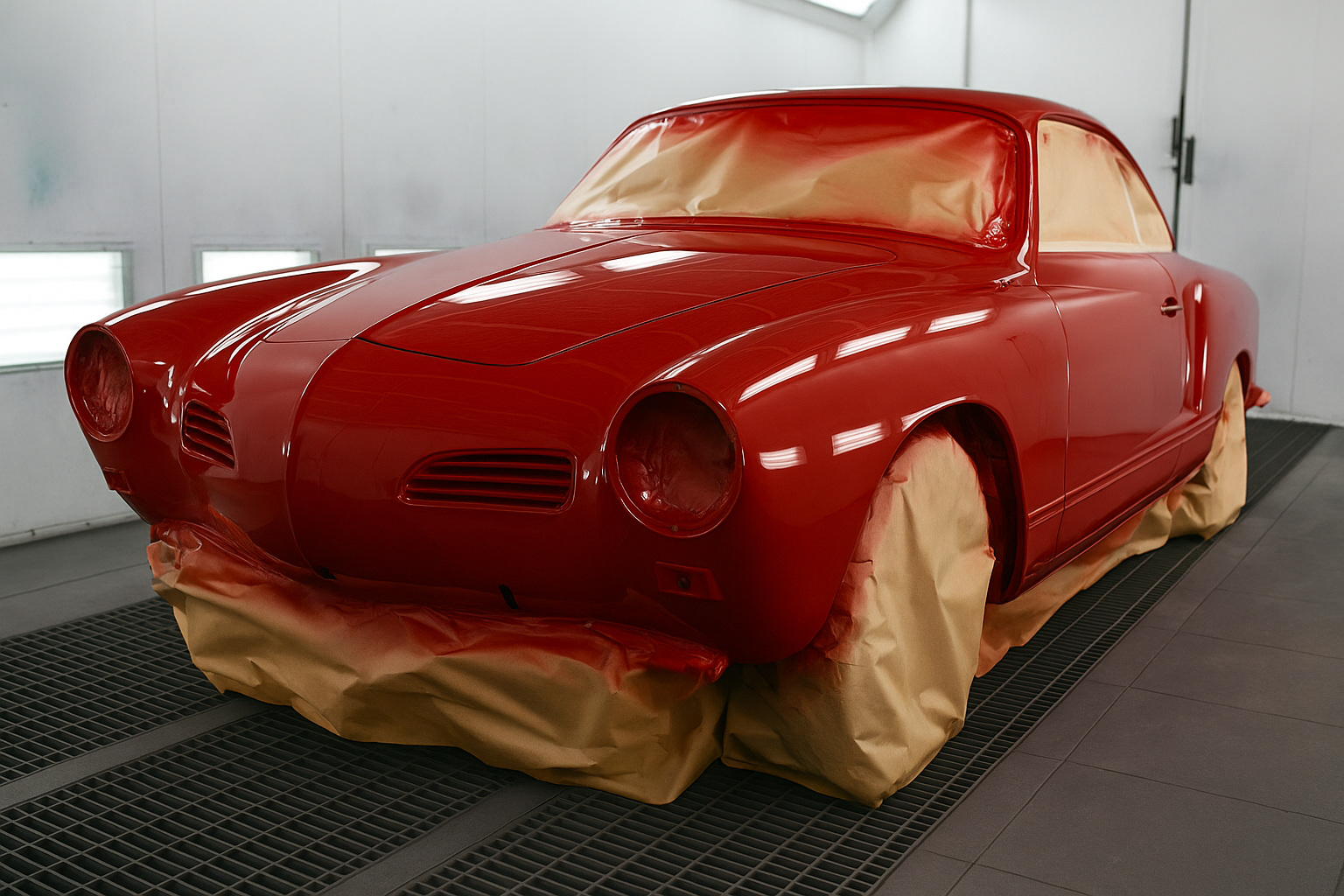
Once the car body is fully prepped, the actual painting process begins. The vehicle is carefully sanded, then sealed to provide the perfect foundation for paint. Next comes the crucial step of selecting the correct color – particularly important for authentic restoration. Historical color codes often need to be researched in archives or manufacturer records.
The paint is applied in several thin coats using a spray gun, with defined drying times between layers to ensure a perfect result. After the final coat has cured completely, the surface is polished to achieve the desired level of gloss.
How Much Does a Classic Car Paint Job Cost?
Costs can vary greatly. A basic repaint may start at around €1,500, while a full restoration with extensive bodywork can run into the tens of thousands. The duration also depends on the car’s condition and the scope of the work it can take anywhere from a few days to several weeks or even months.
Because painting a classic car requires specialized skills, professional execution is strongly recommended. Experienced painters know how to combine modern materials with traditional techniques to achieve a result that not only looks stunning but also respects the car’s historical authenticity.
In this way, every paint job becomes much more than just a new coat of color it’s a contribution to the preservation, authenticity, and beauty of a timeless vehicle.
Value Increase Through Professional Painting
A high-quality paint job isn’t just an aesthetic upgrade it can significantly increase the value of your classic car. A cleanly painted, well-protected body makes a strong impression on collectors and at classic car shows. The new paint layer also provides long-term protection against corrosion and environmental damage.
Whether for restoration or customization, a professional paint job brings back the shine of the past and ensures that your classic car remains a true eye-catcher for years to come.