
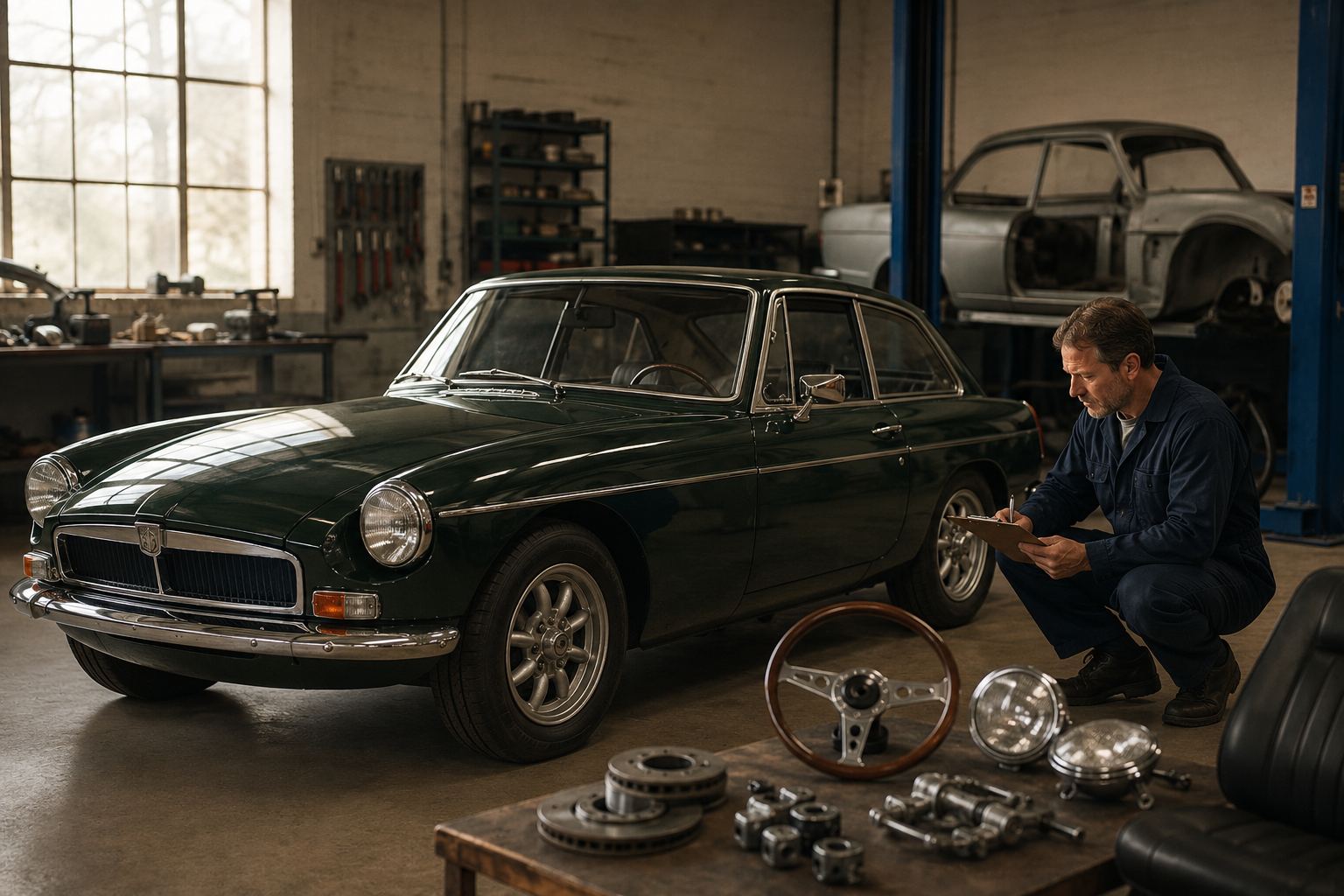
Classic Car Modifications: What Is Allowed and What Is Not?
- Modifications to classic cars are generally possible, but they must be carried out safely, professionally, and in a way that allows the vehicle to remain road legal.
- For vehicles with an H license plate, it is crucial that the historic character of the vehicle is preserved.
- The term “period-correct” is particularly important: modifications should correspond to the era of the vehicle.
- Modern tuning parts, extreme body modifications, or unregistered performance upgrades can be problematic.
- Many technical improvements, such as upgrades to brakes, safety, or everyday usability, are permitted as long as they are implemented properly.
- Before making major modifications, a testing organization such as TÜV, DEKRA, or GTÜ should always be consulted.
Classic Car Modifications: What Is Allowed and What Is Not?
Classic cars are more than just old vehicles. They are rolling witnesses of their time, collector’s items, and often also a piece of personal history. Nevertheless, many owners wish to make small or larger adjustments: better brakes, more comfort, modern safety technology, a different suspension, or an individual interior. But especially with historic vehicles, the question quickly arises: What may actually be modified, and at what point are road approval, the H license plate, or insurance coverage put at risk?
Why Modifications to Classic Cars Are Particularly Sensitive
When it comes to vehicle modifications, the main question is generally whether the change is technically permissible, safe, and eligible for registration. With a classic car, however, there is another important factor: its historic character. A vehicle with an H license plate is intended to be preserved as a piece of automotive cultural heritage. It must be in good condition and largely correspond to its original or period-correct state.
This is exactly why modifications to classic cars are assessed more strictly than modifications to modern vehicles. Not every modification is automatically prohibited. The decisive factor is whether the change fits the year of manufacture, the type of vehicle, and the technology of the period.
What Does Period-Correct Modification Mean?
The most important term when it comes to classic car modifications is “period-correct.” As a rule, a modification is considered period-correct if it would have been possible, common, or technically plausible within the first ten years after the vehicle’s initial registration. The modification does not necessarily have to have actually been carried out at the time. What matters is that it fits the era of the vehicle and does not destroy the overall historic impression.
Examples of period-correct modifications may include:
- Wheels that were already available at the time for this model or comparable vehicles
- Sports steering wheels from the appropriate era
- Period-style suspension modifications
- Engine or performance upgrades that were technically common and registrable at the time
- Historic auxiliary instruments Original or period-style optional equipment
The individual case is always decisive. What may be acceptable for a sporty youngtimer from the 1990s can quickly appear inappropriate on a pre-war vehicle.
Which Classic Car Modifications Are Allowed?
Many modifications are possible if they are carried out professionally, documented properly, and technically permissible. These include, for example:
- Safety-Related Improvements
Modifications that serve safety purposes are often accepted, provided they do not significantly alter the historic character of the vehicle. These may include better brake pads, dual-circuit brake systems, seat belts, or discreet improvements to lighting and suspension.
Here, too, the same principle applies: the modification must be carried out professionally and, where necessary, officially registered.
- Environmental Compatibility and Everyday Usability
A retrofitted catalytic converter can be permissible for many classic cars, even if it was not part of the original equipment. Such measures serve environmental purposes and may be accepted as long as they are implemented cleanly and do not fundamentally alter the vehicle.
Technical adjustments that improve reliability are also often possible. These include, for example, modern ignition systems housed in a historic-looking casing or discreet electrical improvements.
- Faithful Restorations
A professional restoration does not usually put classic car status at risk. It is important that the bodywork, technology, interior, and paintwork are restored as faithfully to the original or as period-correctly as possible.
Anyone restoring a classic car should carefully keep invoices, photos, expert reports, and parts documentation. This documentation can be crucial during a later inspection.
- Period-Style Tuning
Classic cars may certainly appear sportier or more individual, as long as the tuning fits the era. A classic sports exhaust, suitable alloy wheels, or a period-style sports suspension may be possible.
It becomes problematic when modern tuning parts are installed that clearly do not match the vehicle’s period, either visually or technically.
Which Classic Car Modifications Are Not Allowed?
Modifications that significantly alter the historic character of the vehicle or are not compatible with the regulations of the German Road Traffic Licensing Regulations are not permitted, or at least considered highly critical. These include, for example:
- Modern Tuning Parts Without Historic Reference
Large modern wheels, LED light strips, digital cockpits, or conspicuous spoilers from current production can put the H license plate at risk. In most cases, they do not match the appearance of the vehicle and significantly alter its historic impression.
- Unregistered Performance Upgrades
An engine conversion or a significant increase in performance is particularly sensitive. Even if the modification has been carried out properly from a technical perspective, it must still be permissible and eligible for registration. It must also fit the historic character of the vehicle.
A modern engine from a current vehicle is generally not permitted in a classic car with an H license plate. The situation may be different if the engine used was already available in the model range at the time or if the conversion is period-correct.
- Body Modifications Without Historic Reference
Wide-body kits, modern spoilers, extreme lowering, or heavily altered body shapes can put classic car status at risk. With the H license plate, it is not only the technology that matters, but also the vehicle’s external appearance.
- Improper or Safety-Critical Modifications
Regardless of classic car status, one thing always applies: a vehicle must be roadworthy. Improper welding work, incorrect wheel and tire combinations, defective brake systems, or untested suspension parts can lead to the operating permit becoming invalid.
This can not only become expensive, but may also cause problems with the insurance company in the event of a claim.
H License Plate: When Does It Become Critical?
The H license plate is particularly attractive for many classic car owners. It can bring tax advantages, make it easier to drive in environmental zones, and underline the historic value of the vehicle. However, historic status is tied to certain conditions.
The vehicle must be at least 30 years old, be in good condition, and largely remain original or period-correct. The points mentioned above can therefore lead to the H license plate being revoked.
Important: Even after the H license plate has been granted, later modifications can still be problematic. Anyone who changes their vehicle after the inspection should consult a testing organization in advance.
Registration, Expert Reports, and Documentation
Many modifications must be inspected and entered into the vehicle documents. This applies in particular to changes to the engine, brakes, suspension, wheels, exhaust system, or bodywork.
Classic car owners should therefore not wait until after the modification to visit the inspection center. It is better to discuss the planned modification beforehand with TÜV, DEKRA, GTÜ, or another recognized testing organization.
Helpful documents for approval after a classic car modification include old brochures, historic expert reports, period-correct accessory catalogs, invoices, photos taken before, during, and after the modification, technical data sheets, and proof of the original or accessory parts used.
As a general rule: the better a modification is documented, the easier it is to prove that it is period-correct and professionally executed.
What Applies to the Classic Car Interior and Comfort?
The interior may also not be modernized arbitrarily if the vehicle is to retain its H license plate. A modern multimedia system with a large touchscreen, sports seats from a current vehicle, or conspicuous LED lighting can be problematic.
Discreet comfort improvements, on the other hand, are often possible. These include, for example, a hidden radio installation, a subtle additional power socket, reworked seats in the original style, or period-correct accessories.
Here, too, the overall impression is what counts: the classic car should still look and feel like a vehicle from its era. The most important rule of thumb is: the further a modification deviates from the original or period-correct condition, the greater the risk for road approval, the H license plate, and insurance coverage.